
Quick answer
Most atacama desert stargazing photos are made in open public desert near San Pedro de Atacama, where entry costs 0 USD and access runs 00:00–23:59 daily. They are long exposures, so they record more colour and detail than the naked eye sees. The single biggest variable is moon phase: a bright moon washes out the galactic core entirely, regardless of season or altitude.
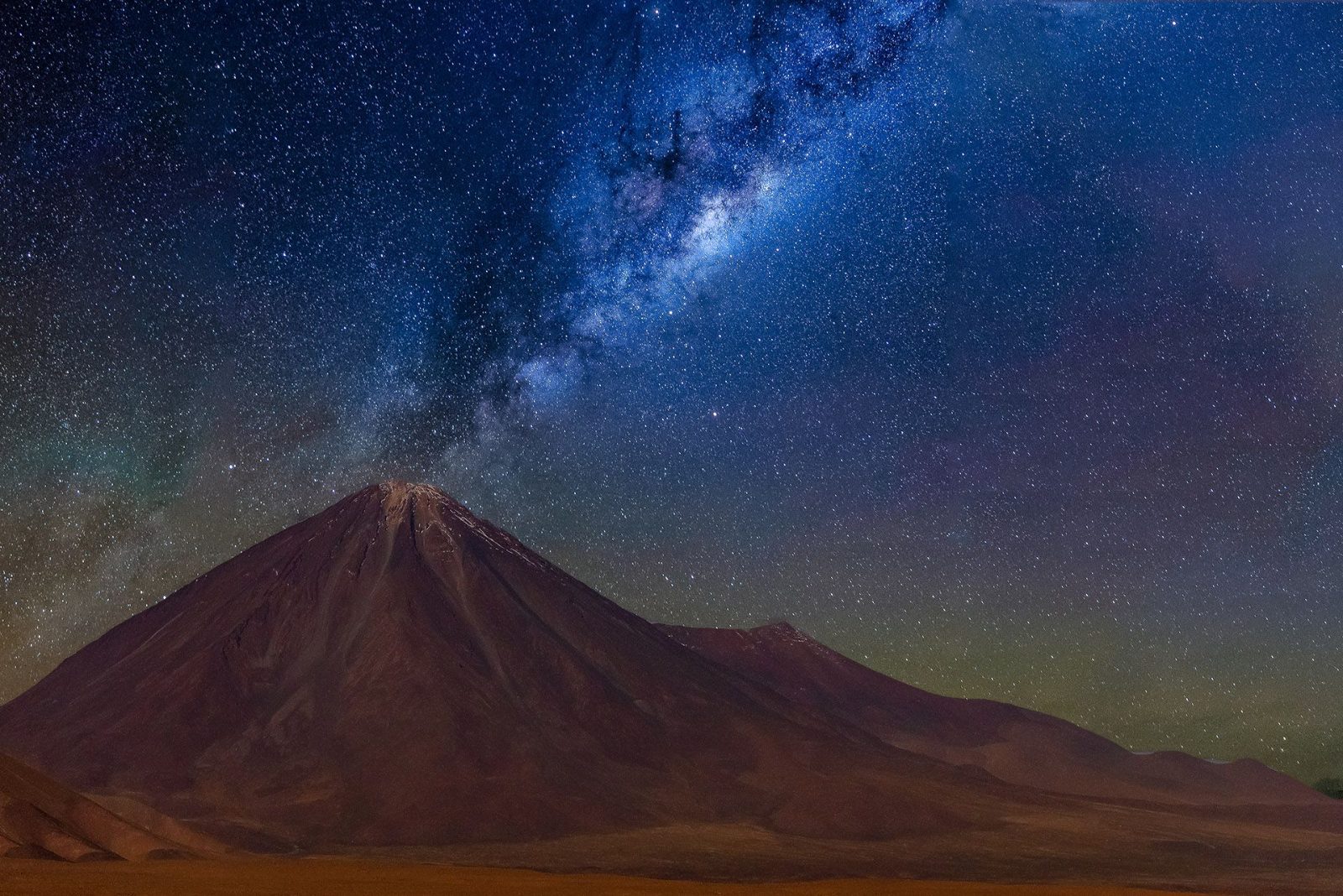
The Atacama receives less than 15 millimetres of rain a year in places, and some weather stations there have gone decades without a recorded drop. That aridity is the whole story. Water vapour is what scatters starlight and softens contrast, and its near-absence — combined with an altitude of roughly 2,400 metres at San Pedro de Atacama and far higher on the Chajnantor plateau — is why the world's major observatories, ALMA and Paranal among them, chose this stretch of northern Chile. The same conditions are why a Chilean night sky photography session here produces images that look almost synthetic to viewers used to European or North American skies. What a reader should understand before comparing images is that a camera and an eye do different work. Long exposures accumulate light; the eye does not. The galactic core, the Magellanic Clouds and the dark Coalsack nebula are all genuinely visible without optics from a dark site here, but they appear as grey structure rather than the amber and violet gradients a thirty-second exposure records. Nothing in a well-made photograph is invented — the colour is real, simply too faint for human cone cells at that intensity. Understanding this removes most of the disappointment that occasionally follows a first night out. Three factors govern whether any given night resembles the pictures. Moon phase dominates: within four days of full moon, the sky is bright enough to read by and the faint structure vanishes. Cloud is the second — the altiplanic winter, roughly January and February, pushes moisture over the cordillera and produces the region's only meaningful overcast spell. Southern-hemisphere winter, which is where the calendar sits in August 2026, delivers the driest and most reliable conditions of the year, with the Southern Cross and Alpha Centauri well placed. Third is horizon choice: the salt pans, the Valle de la Luna ridgelines and the Licancábur volcano all give a foreground, and the foreground is what separates a record from an image. Anyone assessing atacama desert stargazing photos as a planning tool should therefore read them as evidence of conditions rather than guarantees. The desert delivers those conditions more often than almost anywhere else on Earth, but it does not deliver them on request. A guided Atacama stargazing tour buys local knowledge of where the light is darkest and which night is worth committing to — and, more practically, transport away from the town's own modest glow.
“Nothing in a well-made photograph is invented — the colour is real, simply too faint for human cone cells at that intensity.”
Top Locations for Atacama Desert Stargazing Photos
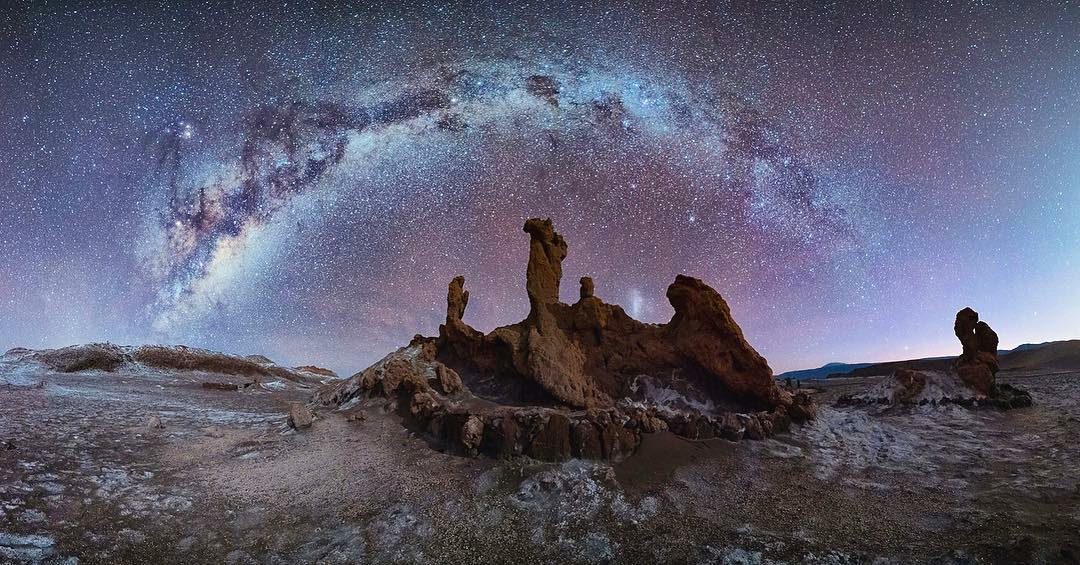
Valle de la Luna
Frame the jagged salt formations and clay ridges against the Milky Way core for high-contrast foreground interest.
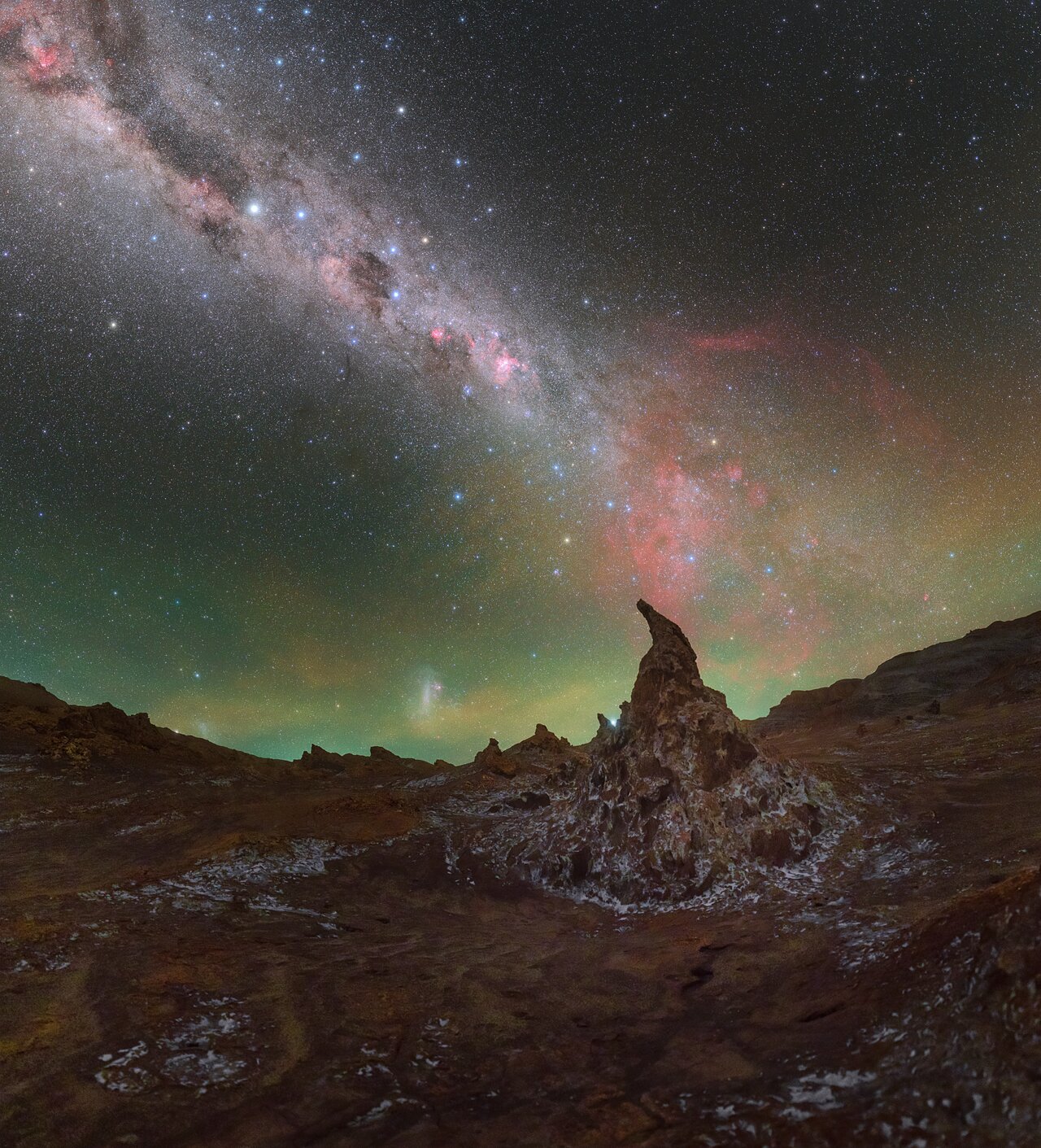
Piedras Rojas
Capture the stark contrast of red rock formations and the reflective salt flats under a dense star field.
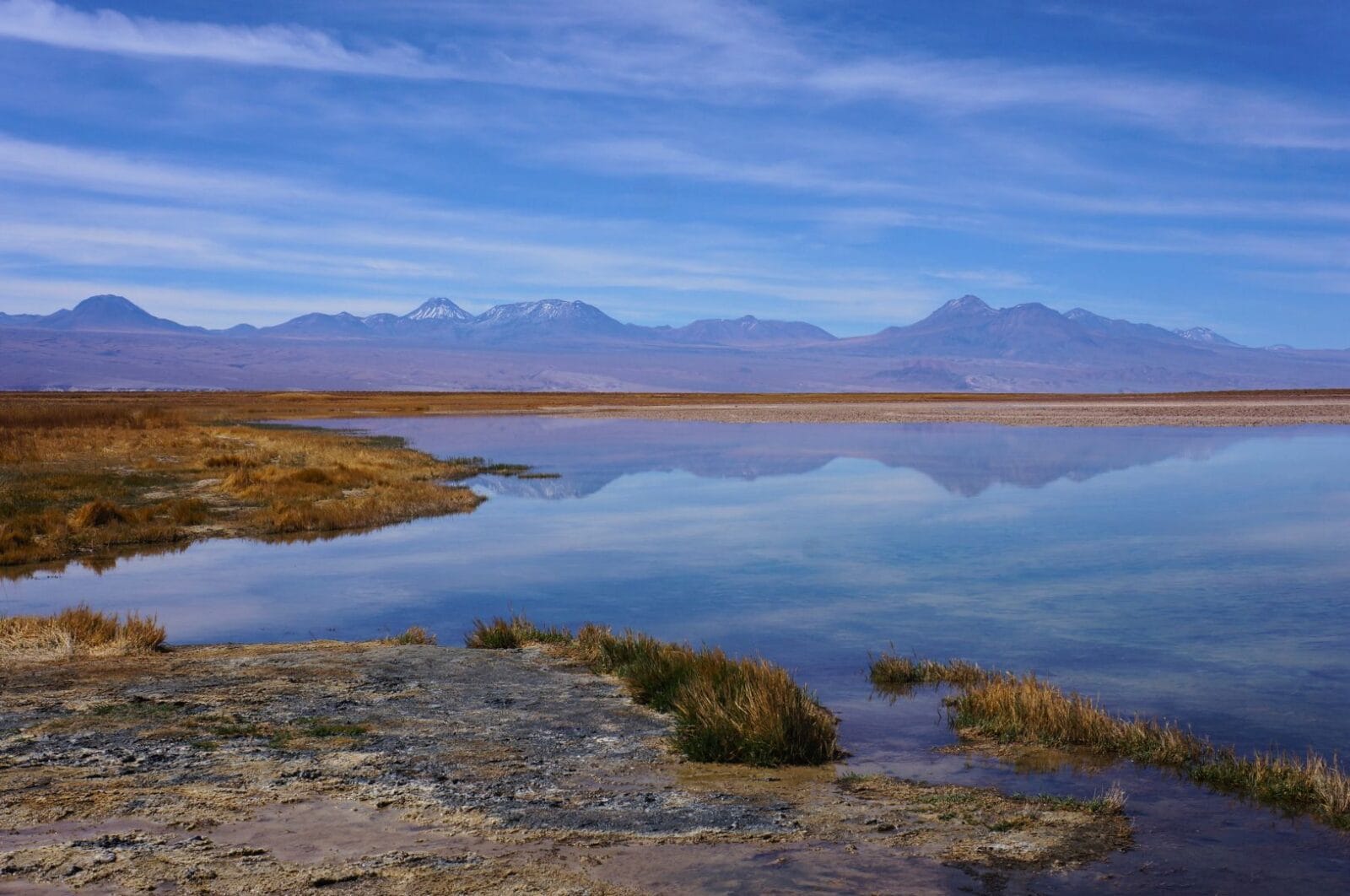
Laguna Cejar
Use the calm, saline water surface to photograph reflections of the constellations and the Magellanic Clouds.
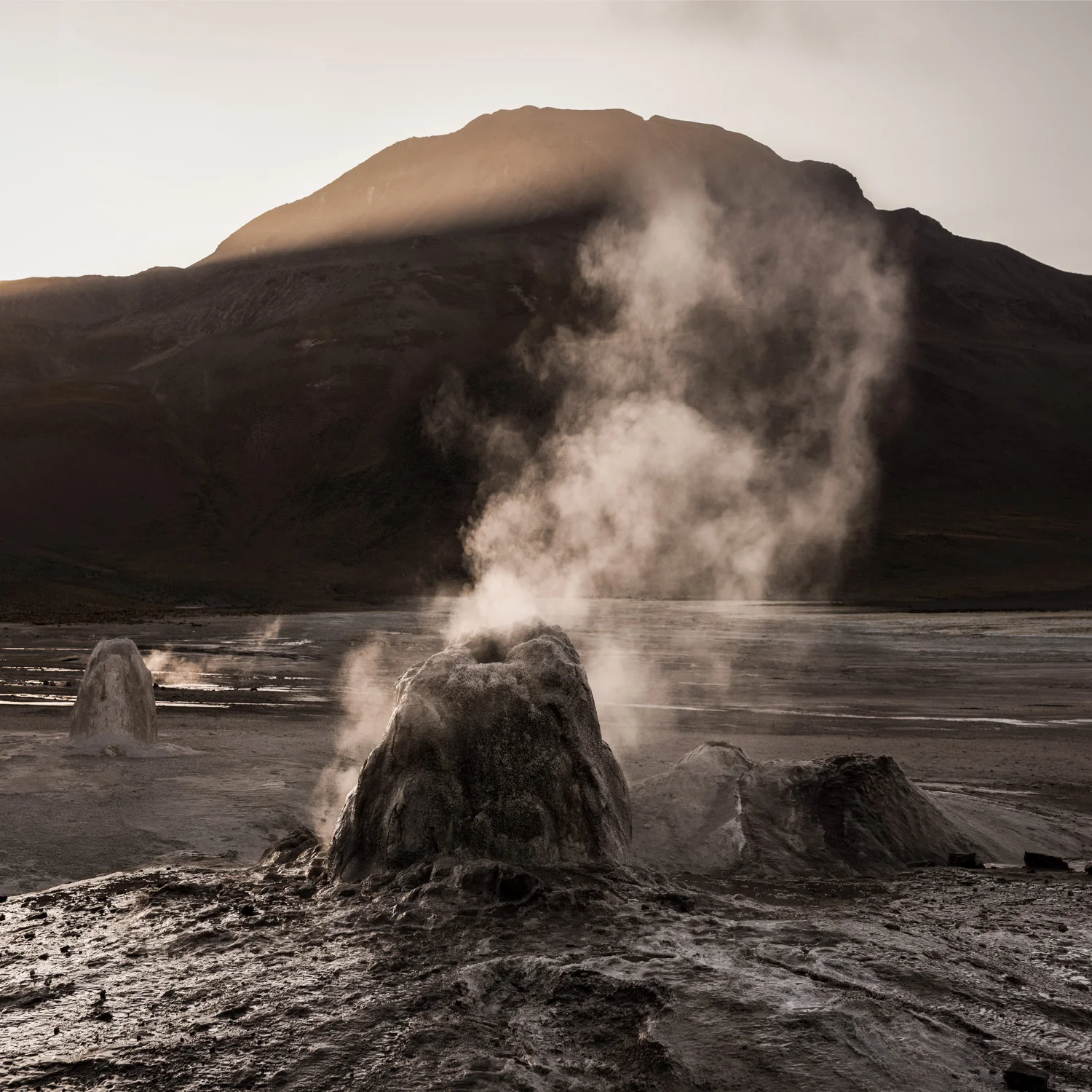
El Tatio Geysers
Photograph steaming geyser vents beneath the celestial expanse, utilizing the high-altitude atmospheric clarity.
The Best Time for Atacama Desert Stargazing Photos
The optimal window for astrophotography in the Atacama Desert occurs during the new moon phase, when the absence of lunar light ensures maximum contrast for capturing celestial objects. Clear, dry weather persists year-round, but late spring and autumn offer the most stable atmospheric conditions.
New Moon Phase
MinimalClear skies, 0°C to 15°C
This period provides the darkest skies for long-exposure photography. Plan sessions for the days surrounding the new moon to minimize ambient light.
Austral Summer (Dec–Feb)
HighOccasional clouds, 5°C to 20°C
Summer brings the Altiplanic Winter phenomenon, which can introduce cloud cover. Check regional forecasts for moisture patterns during these months.
Austral Autumn/Spring (Mar–May, Sep–Nov)
ModerateStable skies, -5°C to 18°C
These shoulder seasons offer the most consistent visibility and lower humidity. Temperatures drop significantly at night, requiring thermal preparation for equipment and photographers.
Verdict: The best opportunity for photography is during the new moon phase in the months of April, May, September, or October.
Essential Gear for Atacama Desert Stargazing Photos
Night photography at 2,400 metres demands gear that handles darkness, cold and condensation, so assemble these items in the weeks before your trip rather than hunting for them in San Pedro de Atacama.
-
Reserve a sturdy tripod early — Rental stock in San Pedro de Atacama is limited, and long exposures fail without a stable base.
-
Pack a fast wide-angle lens — An f/2.8 or faster lens at 14-24mm captures the Milky Way core with less noise.
-
Buy a lens warmer and battery pack — Desert humidity drops fast after midnight and dew forms on cold front elements.
-
Bring spare batteries kept warm — Cold night air drains lithium cells quickly, so store them in an inner pocket.
-
Add a remote shutter or intervalometer — Touching the camera during 20-second exposures blurs stars; an intervalometer also handles star trails.
-
Fit a red-light headlamp — Red light preserves your night vision and avoids ruining other photographers' frames.
-
Layer thermal clothing, hat and gloves — Temperatures fall near freezing after dark even following warm days.
-
Load fresh memory cards and check firmware — Do this before leaving town, since connectivity in the desert is unreliable.
Accessing Sites for Atacama Desert Stargazing Photos
Most stargazing sites are located in the remote desert areas surrounding San Pedro de Atacama, Antofagasta, Chile. Visitors typically access these locations via private vehicle or specialized transport services starting from the town center.
Route 23 or Route B-245 heading away from town centers
Private transfer services from San Pedro de Atacama
Walking to the outskirts of San Pedro de Atacama
Hours for Taking Atacama Desert Stargazing Photos
Public areas of the Atacama Desert are accessible at all hours, allowing photographers to access locations for stargazing sessions throughout the night.
| Monday | 00:00–23:59 | |
|---|---|---|
| Tuesday | 00:00–23:59 | |
| Wednesday | 00:00–23:59 | |
| Thursday | 00:00–23:59 | |
| Friday | 00:00–23:59 | |
| Saturday | 00:00–23:59 | |
| Sunday | 00:00–23:59 |
Costs Associated with Atacama Desert Stargazing Photos
Access to public areas within the Atacama Desert for stargazing photography is free of charge. Costs are only incurred when booking specialized photography workshops or private observatory sessions through independent operators.
While accessing desert locations is free, photographers typically pay variable rates to private operators for guided workshops or specialized observatory access.
Check availability
Frequently asked questions about atacama desert stargazing photos
Everything you need to know about atacama desert stargazing photos