

Quick answer
The strongest window is 22:00–04:00, when darkness is deepest and humidity lowest, during the austral winter months of June to August. Public areas of the desert stay open around the clock, so timing depends on the sky rather than a gate. The caveat: a bright moon washes out faint detail in any month, so check the lunar calendar before locking dates.
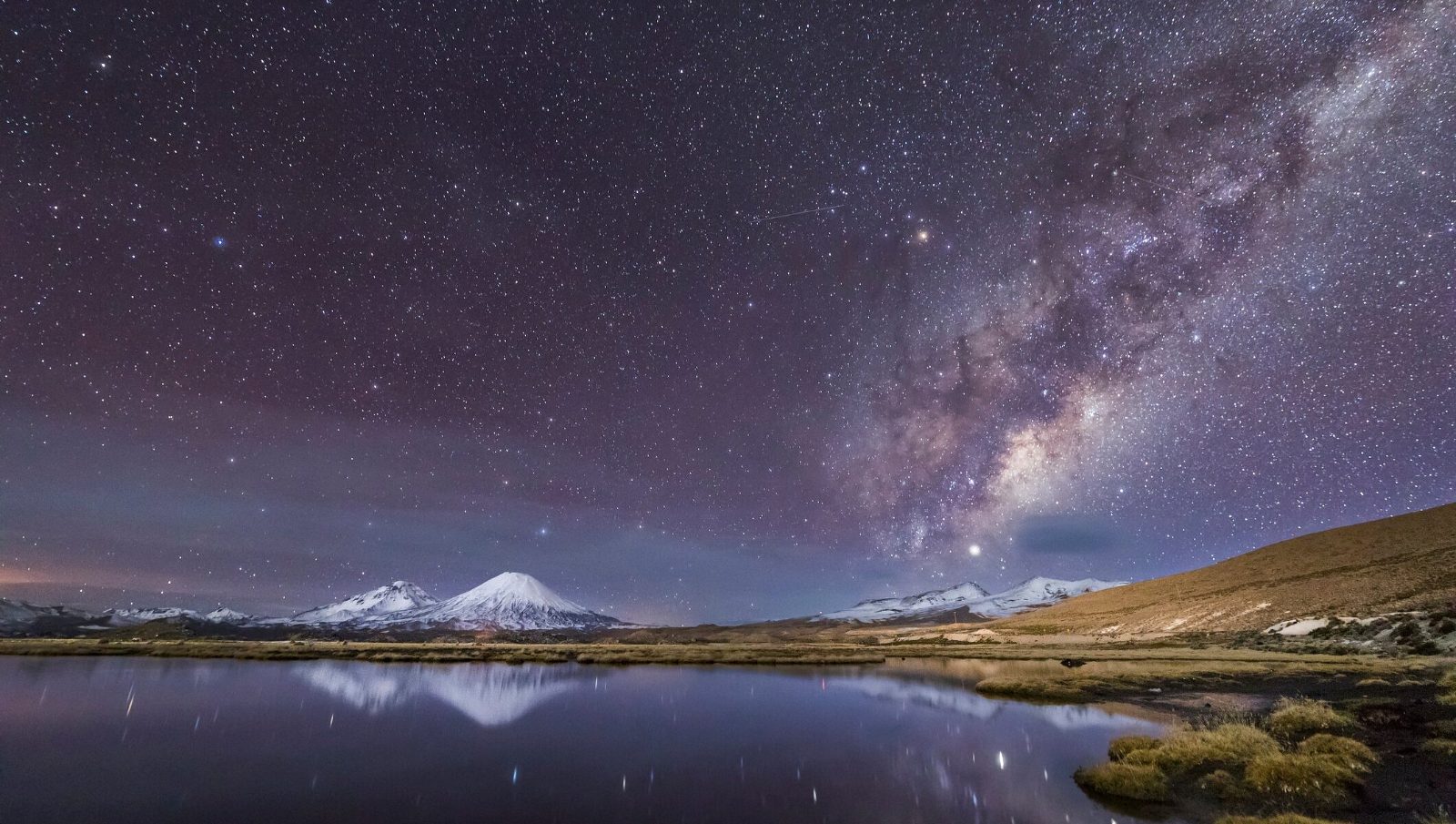
Roughly a third of the world's professional telescope collecting area sits within a few hours' drive of San Pedro de Atacama. The Atacama Large Millimeter Array on the Chajnantor plateau, the Very Large Telescope on Cerro Paranal, and the observatories rising near La Silla were not placed here for scenery. They were placed here because the Humboldt Current and the Andes strip moisture from the air twice over, leaving a sky with unusually low water vapour and very little turbulence. What professional astronomers call seeing — the steadiness of a star's image — is measured here in fractions of an arcsecond. Visitors inherit the same conditions without owning a telescope. That inheritance is not evenly distributed across the calendar. Anyone weighing the best time to visit atacama desert for stargazing is really weighing three separate variables that rarely align by accident. The first is cloud and humidity, which the austral winter suppresses most reliably. The second is altitude and cold: San Pedro sits near 2,400 metres, and the Valle de la Luna rim and Chajnantor road climb far higher, where night temperatures fall well below freezing. The third, and the one most often overlooked, is the moon. A gibbous or full moon raises the sky background enough to erase the Magellanic Clouds, the dark lanes of the Milky Way, and the fainter nebulae that make the southern hemisphere sky distinct from anything visible in Europe or North America. Serious observers plan around new moon first and everything else second. Season also shifts what is overhead. The galactic core rides high through the southern autumn and winter evenings; the Large and Small Magellanic Clouds are circumpolar and available year-round, though they sit higher and darker in some months than others. Eta Carinae, the Southern Cross, Alpha Centauri and Omega Centauri all belong to this hemisphere and reward a clear, moonless hour. Understanding the best time to visit atacama desert for stargazing means matching a target list to a date rather than hoping for a good night. Use that logic when booking. Set the month by the moon phase and the season, then confirm the nightly window, then let the dedicated sections on this site handle hours, costs, road access and what to pack for a Chilean desert night that runs colder than most people expect.
“Set the month by the moon, not by the flight price — a full moon erases more sky than a cloud ever will.”
Best Time to Visit Atacama Desert for Stargazing: Seasonal and Hourly Windows
The austral winter months from June to August offer the clearest skies for stargazing in the Atacama Desert due to minimal precipitation and low humidity. During this period, the arrival window of 22:00–04:00 provides the most stable atmospheric conditions for astronomical observation.
Austral Winter
Low visitor densityClear, dry skies; 0°C to 15°C
This season minimizes moisture, providing the highest transparency for celestial viewing.
Austral Spring
Moderate visitor densityMild, dry conditions; 5°C to 20°C
Increasingly stable weather makes this a favorable period for night sky observation.
Austral Summer
Higher visitor densityOccasional clouds; 10°C to 25°C
Higher humidity levels during the altiplanic winter can intermittently obscure visibility.
Verdict: The best time for stargazing is between June and August during the 22:00–04:00 window, when low humidity levels ensure optimal clarity.
Opening Hours for the Best Time to Visit Atacama Desert for Stargazing
The Atacama Desert is accessible to the public at all hours, allowing for independent or guided night sky observation.
| Monday | 00:00–23:59 | |
|---|---|---|
| Tuesday | 00:00–23:59 | |
| Wednesday | 00:00–23:59 | |
| Thursday | 00:00–23:59 | |
| Friday | 00:00–23:59 | |
| Saturday | 00:00–23:59 | |
| Sunday | 00:00–23:59 |
How to Reach the Best Time to Visit Atacama Desert for Stargazing Locations
The Atacama Desert is located in the Antofagasta Region of Chile. Most travelers base themselves in the town of San Pedro de Atacama before heading to remote observation sites via specialized transport.
Route 23 to San Pedro de Atacama
TurBus or Pullman from Calama Airport
Private transfer from San Pedro de Atacama
Preparation Checklist for the Best Time to Visit Atacama Desert for Stargazing
Night temperatures in the Atacama can fall below freezing at 2,400 metres, so gear matters more than anything else you carry.
-
Pack thermal base layers and insulated jacket — Desert nights drop sharply after sunset even in summer.
-
Bring gloves, wool hat and warm socks — Extremities lose heat fastest while standing still at a telescope.
-
Carry a red-light headlamp — Red light preserves night vision that white light destroys in seconds.
-
Fill two litres of water per person — Humidity near zero dehydrates you faster than you notice.
-
Start altitude acclimatisation two days ahead — Viewing sites sit above 2,400 metres where headaches are common.
-
Charge camera and phone batteries fully — Cold drains lithium cells quickly during the 22:00–04:00 arrival window.
-
Check the lunar calendar before fixing dates — A full moon washes out the faintest stars regardless of weather.
-
Wear closed walking shoes with grip — Observation sites are unlit gravel and loose volcanic rock.
Check availability
Frequently Asked Questions About Atacama Desert Stargazing
Everything you need to know about best time to visit atacama desert for stargazing