2 hr 30 min
Atacama Desert Stargazing Tour
- Entry ticket
- Mobile voucher
- Valid same day
- Free cancellation
Atacama Desert Stargazing Tickets — Telescope Nights Beyond San Pedro
Town lights fall behind you, the Milky Way stands up.
Compare fares, pick the fit — all bookings are mobile-voucher and eligible for free cancellation where shown.
2 hr 30 min
2 hr
3 hr
Selecting the right atacama desert stargazing tickets depends on whether you prioritize technical astronomical observation or cultural interpretation of the southern night sky. This cosmic experience offers varied access to specialized optical instruments and local astronomer-led observation sessions.
| General Access Guided Night Sky |
Top pick Advanced Astronomy Telescope Observatory |
Photography Deep Space Imaging | |
|---|---|---|---|
| Focus Area | Constellations and naked-eye myths | Deep sky objects and planets | Long-exposure celestial captures |
| Equipment Access | Laser pointer guidance | High-aperture manual telescopes | Camera mounts and tripod setup |
| Inclusions | Conservation fee included | Academic astronomer briefing | Astrophotography guidance and support |
| Primary Audience | Casual observers | Serious enthusiasts | Astrophotography hobbyists |
| Best for | General visitors | First-timers | Photography-minded travelers |
| See tickets & prices |
Verdict: For most visitors seeking the definitive Chilean nocturnal experience, booking atacama desert stargazing tickets tours that offer academic telescope access provides the most comprehensive encounter with the southern hemisphere cosmos.
Worth it for anyone without a telescope
What atacama desert stargazing tickets actually buy is not darkness — the Altiplano gives that away free — but interpretation and optics. Every listed option pairs you with a guide who can point a laser at the Southern Cross, explain why the Magellanic Clouds are only visible from this hemisphere, and place Andean myths over the same sky the Licanantay read for centuries. The telescope-led runs put Saturn's rings and lunar craters in front of your eye at a scale no phone camera reaches. Self-guided stargazing from a roadside pullout costs a 5,000 CLP conservation fee per person and gives you a naked-eye sky, no aperture, no context. Astrophotography sessions add a tripod-mounted portrait under the Milky Way. The atacama desert stargazing tickets tour format pays off hardest for first-timers, southern-sky newcomers and anyone travelling without gear.
Bottom line: If you own no telescope and cannot name a southern constellation, the atacama desert stargazing tickets tickets earn their keep; bring your own optics and experience, and stargazing tours in San Pedro de Atacama become optional rather than essential.
They complement each other; most visitors who do both call the stargazing experience the more intimate and otherworldly choice.
|
Top pick Stargazing Experience |
Valle de la Luna Tour | |
|---|---|---|
| Primary focus | Astronomy and night sky viewing | |
| Opening hours | 19:00–23:59 | |
| Typical duration | 2–4 hours | |
| Entrance fee | 5,000 CLP (conservation fee) | |
| Best arrival window | 19:00–22:00 | |
| Primary activity | Telescope observation and lectures | |
| Best for | Astro-enthusiasts and romantics | |
| Booking requirements | Advance booking recommended | |
| See tickets & prices |
Verdict: If you have time for only one, choose the stargazing tour to witness the most pristine night skies on the planet, but prioritize the moon valley if you prefer iconic daylight landscapes.
Hand-picked experiences loved by thousands of travelers
2.5 hours
Free Cancellation
Observe celestial wonders through professional telescopes while enjoying warm drinks in the desert night
2 hours
Free Cancellation
Explore Chile's legendary night sky through telescopes, indigenous stories, and authentic local cuisine
2 hours
Free Cancellation
Journey into the desert night to view celestial wonders through telescopes while sipping Chilean wine
3 hours
Free Cancellation
Marvel at celestial wonders while enjoying a traditional picnic and drinks beneath the desert's pristine night sky
2 hours
Free Cancellation
Discover the cosmos through professional telescopes in Chile's pristine desert, with expert guidance and photo keepsakes.
12-13 hours (including rest break)
Free Cancellation
Journey to volcanic lagoons and red rock formations above 4,000m, then explore the cosmos under Chile's clearest skies
2 hours
Free Cancellation
Discover the southern celestial sphere through expert-led observation and capture stunning photos under desert skies
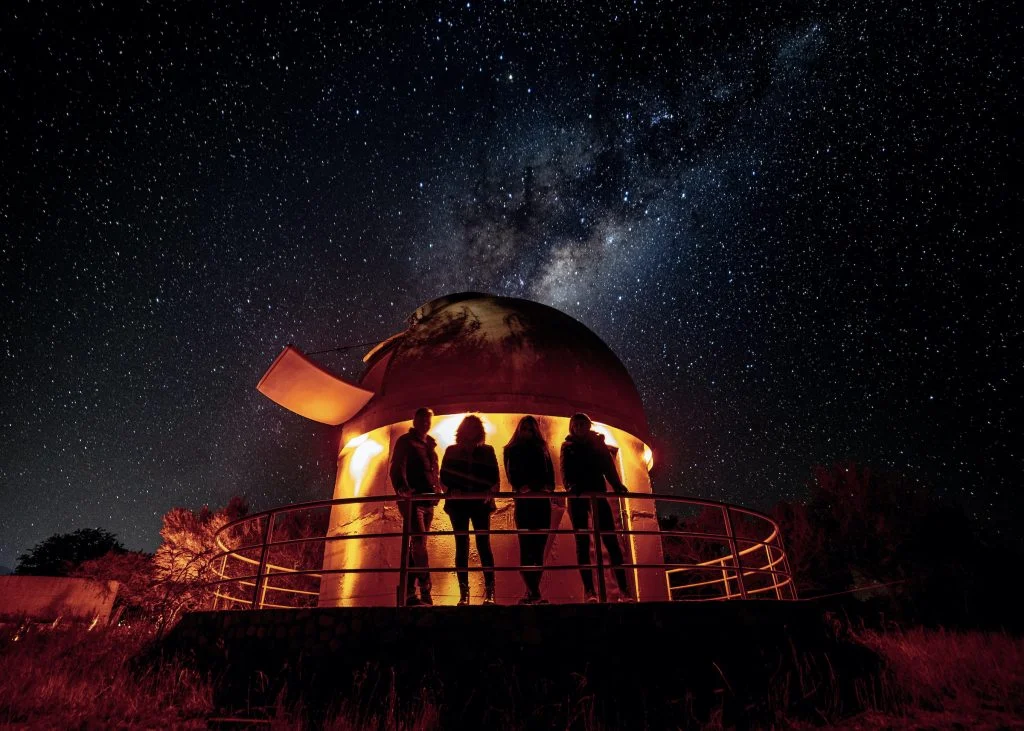
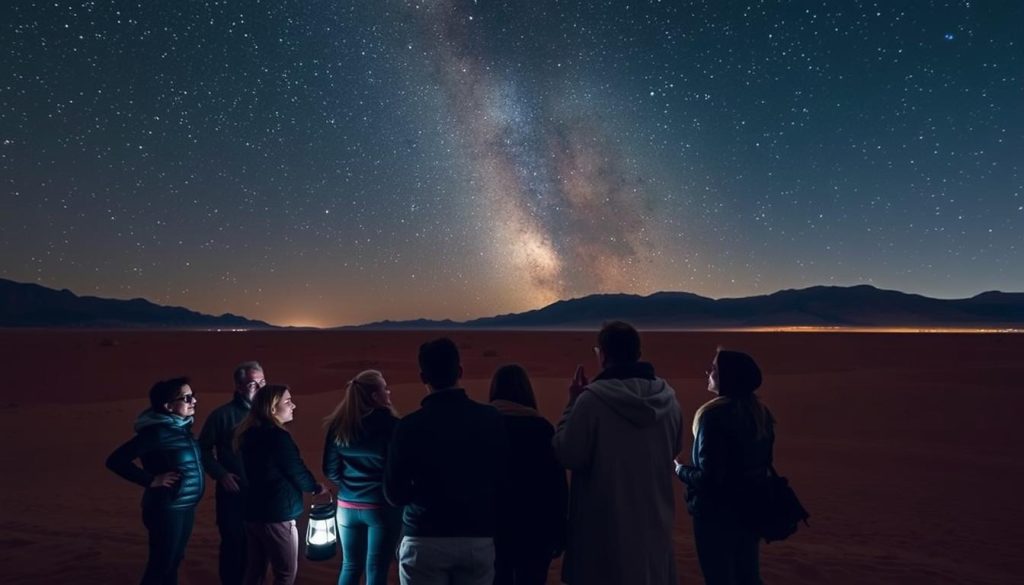
You gather in San Pedro de Atacama while the last light drains off Licancabur, and the vehicle turns off paved road within minutes. Headlights go out.
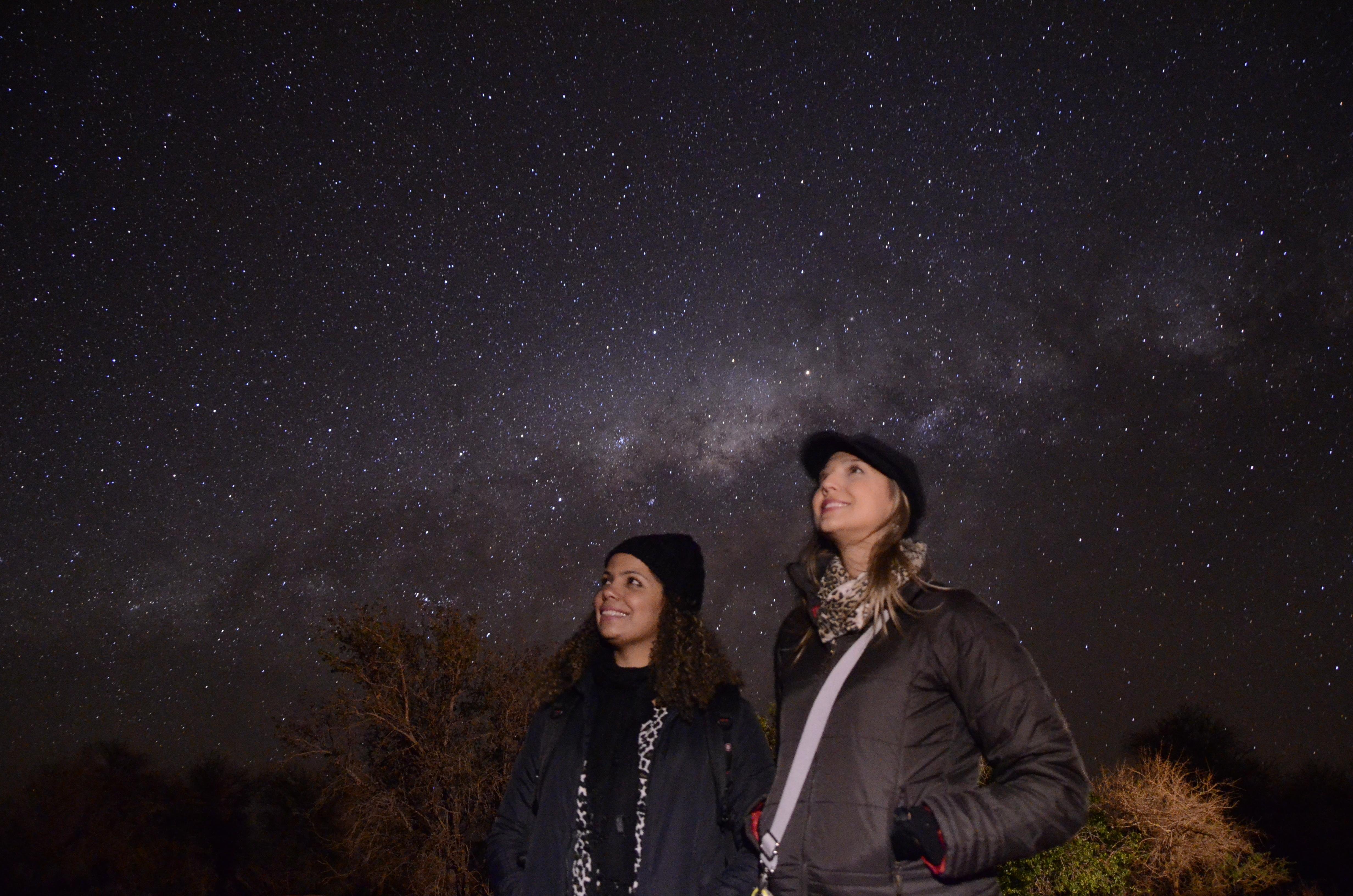
Your eyes need twenty minutes to adapt, and the guide uses them well: a green laser walks you from the Southern Cross to Alpha Centauri, then to the two pale smudges of the Magellanic Clouds.
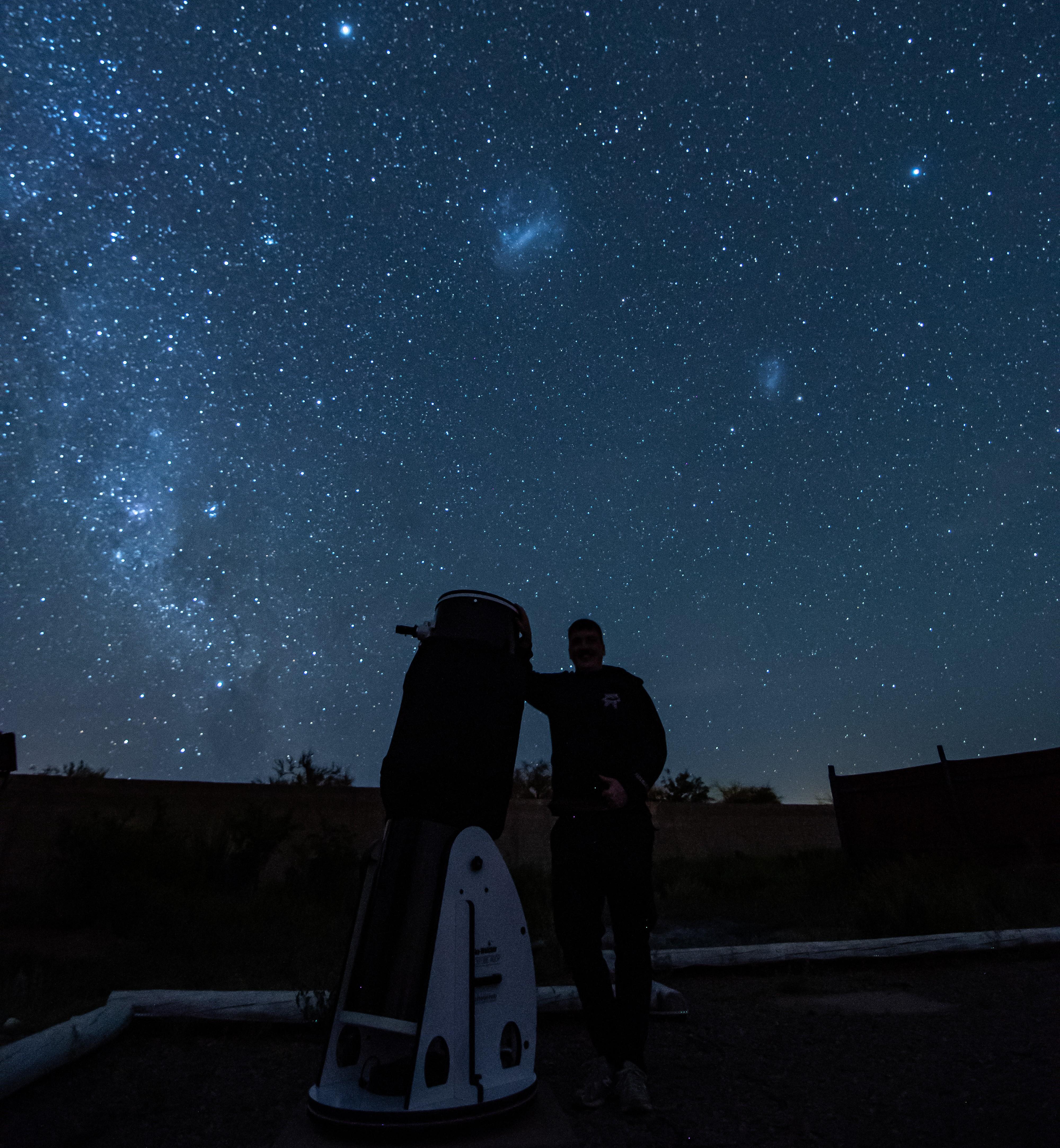
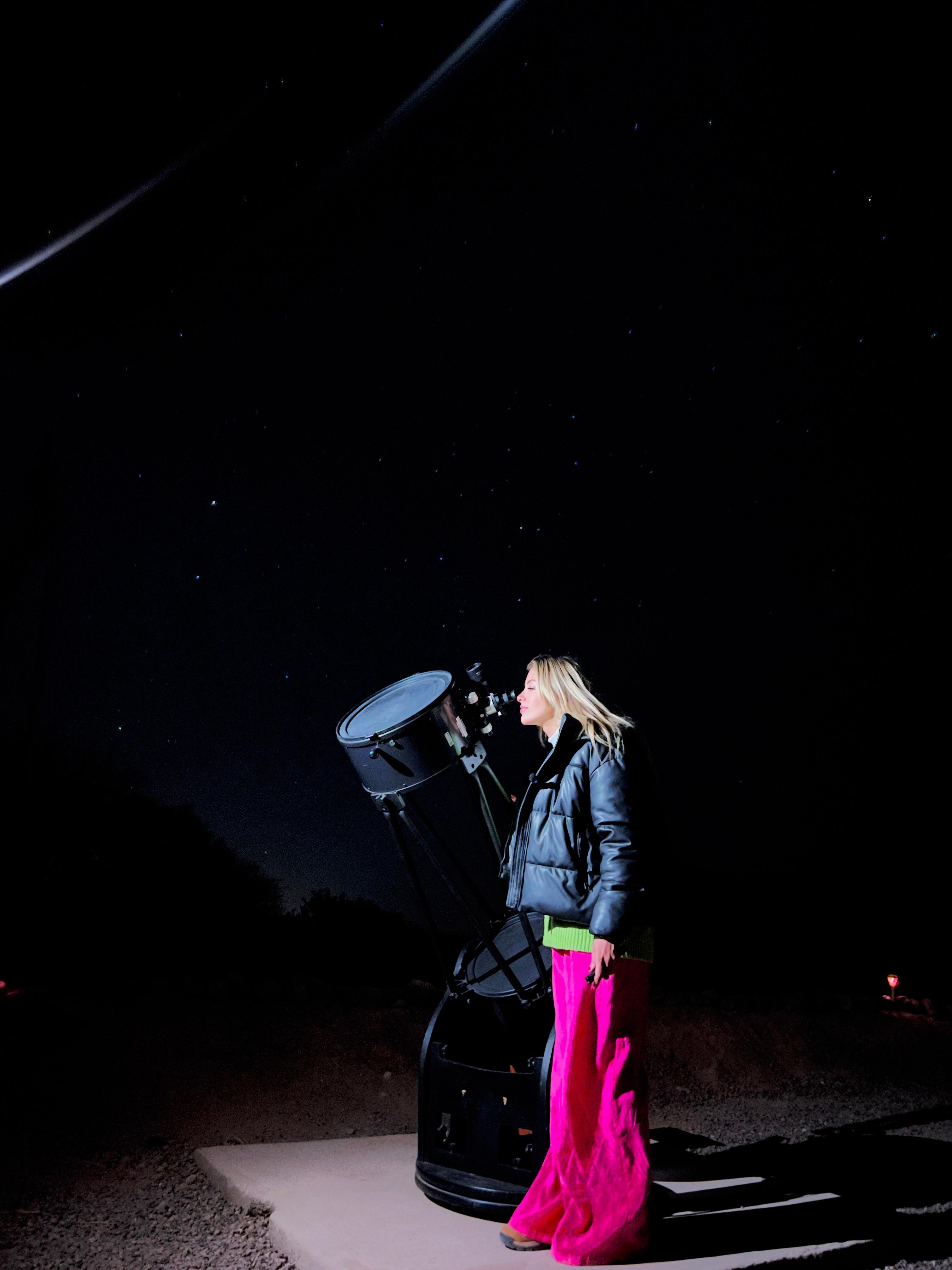
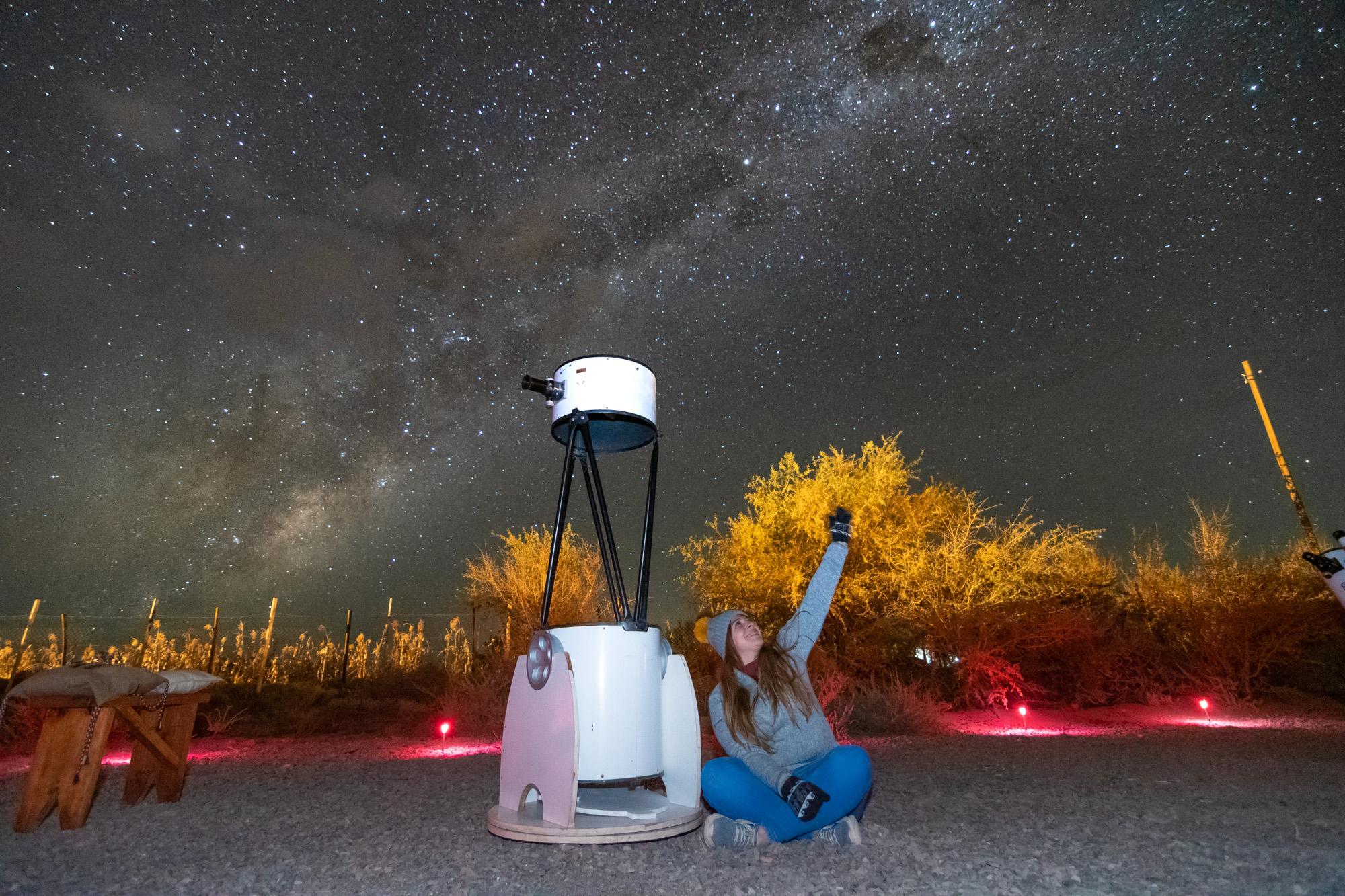
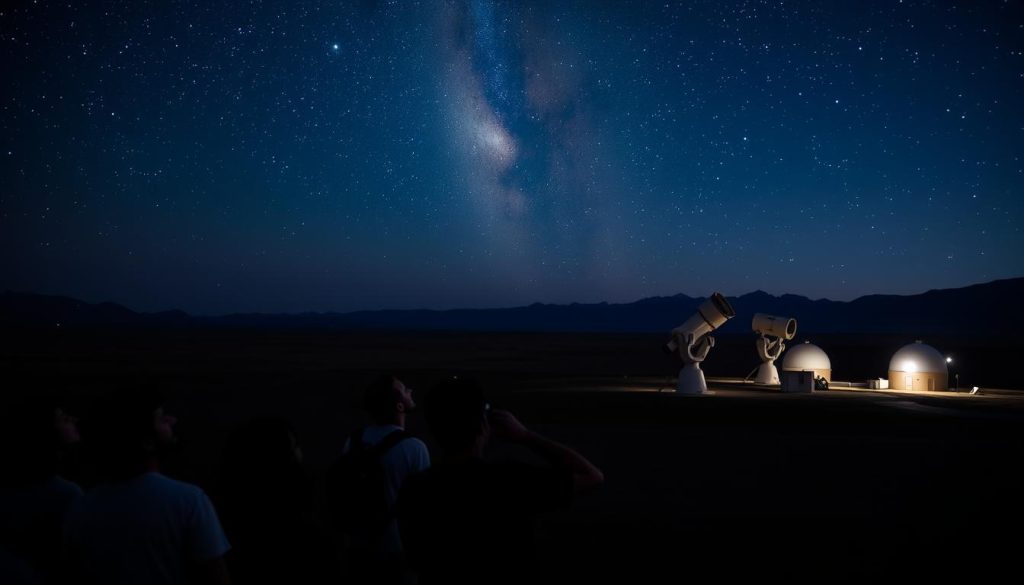
You hand over the 5,000 CLP site conservation fee at the private site, take a blanket, and follow gravel to the telescope field. At the first eyepiece Saturn resolves — rings tilted, a hard yellow coin. At the second, four of Jupiter's moons sit in a row. You queue, look, step back, look again. Someone counts satellites aloud.
Your Atacama Desert stargazing tickets tour ends warm. There is a hot drink, or — on the night built around Andean myths and gourmet tastings — small plates and stories told in the dark about the llama and the fox that Likan Antai eyes found in the shadows of the Milky Way. If you chose the astrophotography session, you stand still for twenty seconds while the shutter stays open, then leave with a portrait of yourself standing under a galaxy. Doors close at 23:59. You drive back on low beams, and the horizon behind you stays black.
All the details about your upcoming adventure in one place
Some weather stations in the Atacama have never recorded rainfall. The desert's hyper-arid core averages under one millimetre a year, and San Pedro de Atacama sits at roughly 2,400 metres on its eastern edge, beneath skies clear on more than 300 nights annually.
That combination — altitude, aridity, and unusually stable air — is the whole reason Atacama Desert stargazing tickets exist. The sky here is not merely visible. It is legible.
Long before telescopes, the Likan Antai read this sky in negative. Their constellations were the dark lanes of interstellar dust cutting across the Milky Way: a llama, its suckling calf, a fox, a partridge. Yacana, the celestial llama, was said to descend at midnight to drink from terrestrial springs. Herders timed births and journeys by its rising. Spanish chroniclers recorded the practice in the sixteenth century, and guides still trace those shapes on San Pedro de Atacama night sky tours, sold locally as tours astronómicos. The instruments came second.
Chile now hosts roughly forty percent of the world's ground-based observing capacity. The ALMA array was inaugurated in March 2013 on the Chajnantor plateau at 5,000 metres, sixty-six antennas listening in millimetre wavelengths; Paranal and La Silla operate further south. The same sterile dryness draws planetary scientists, who have tested Mars rover instruments in the Yungay sector since the early 2000s. Chile also protects the resource by statute: Supreme Decree 43 restricts outdoor lighting across the Antofagasta, Atacama and Coquimbo regions, capping blue-light emission and requiring shielded fixtures. Travel platforms now file Atacama Desert stargazing tickets tickets beside geyser dawns and salt-flat sunsets, evidence that the night has become an attraction in its own right.
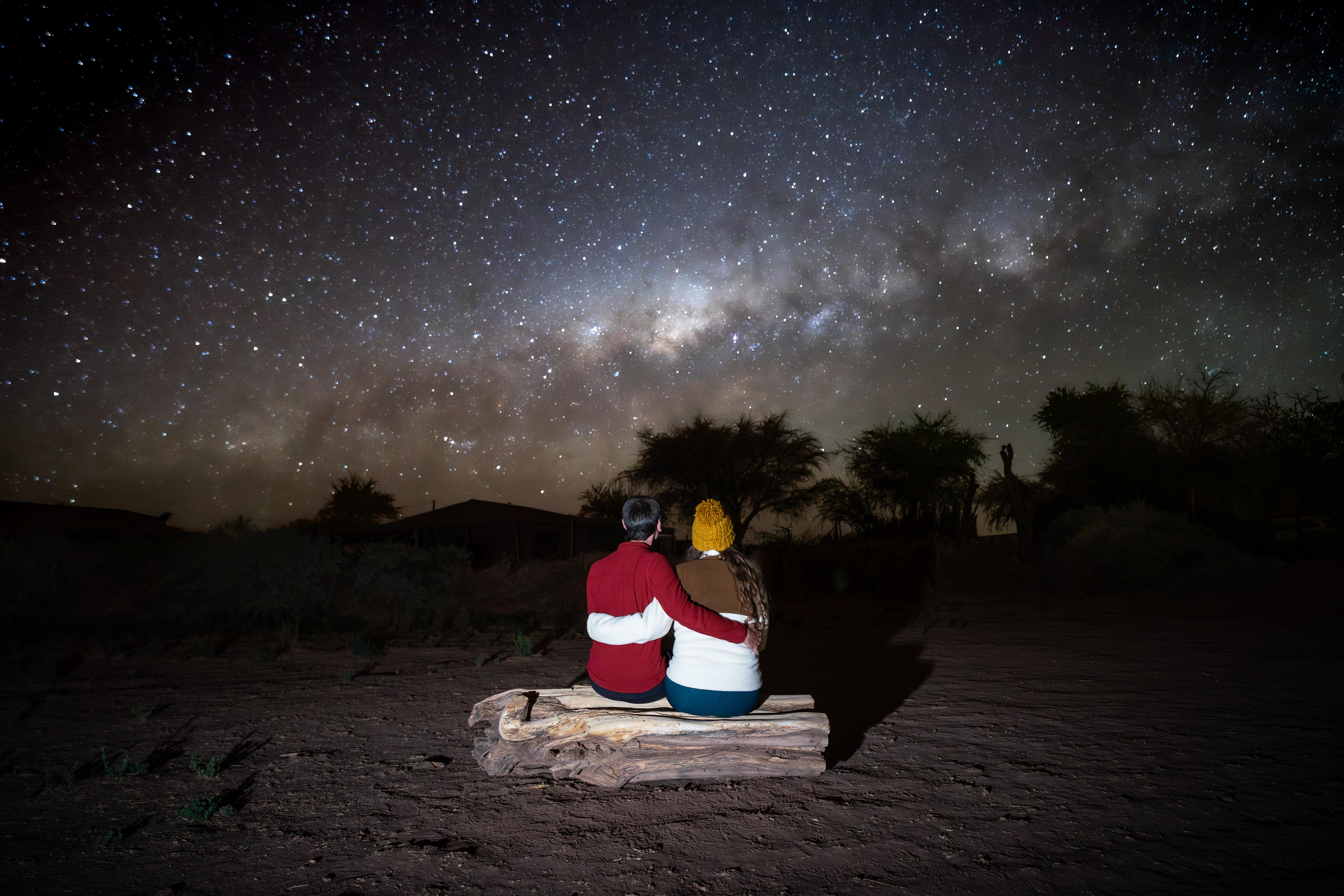
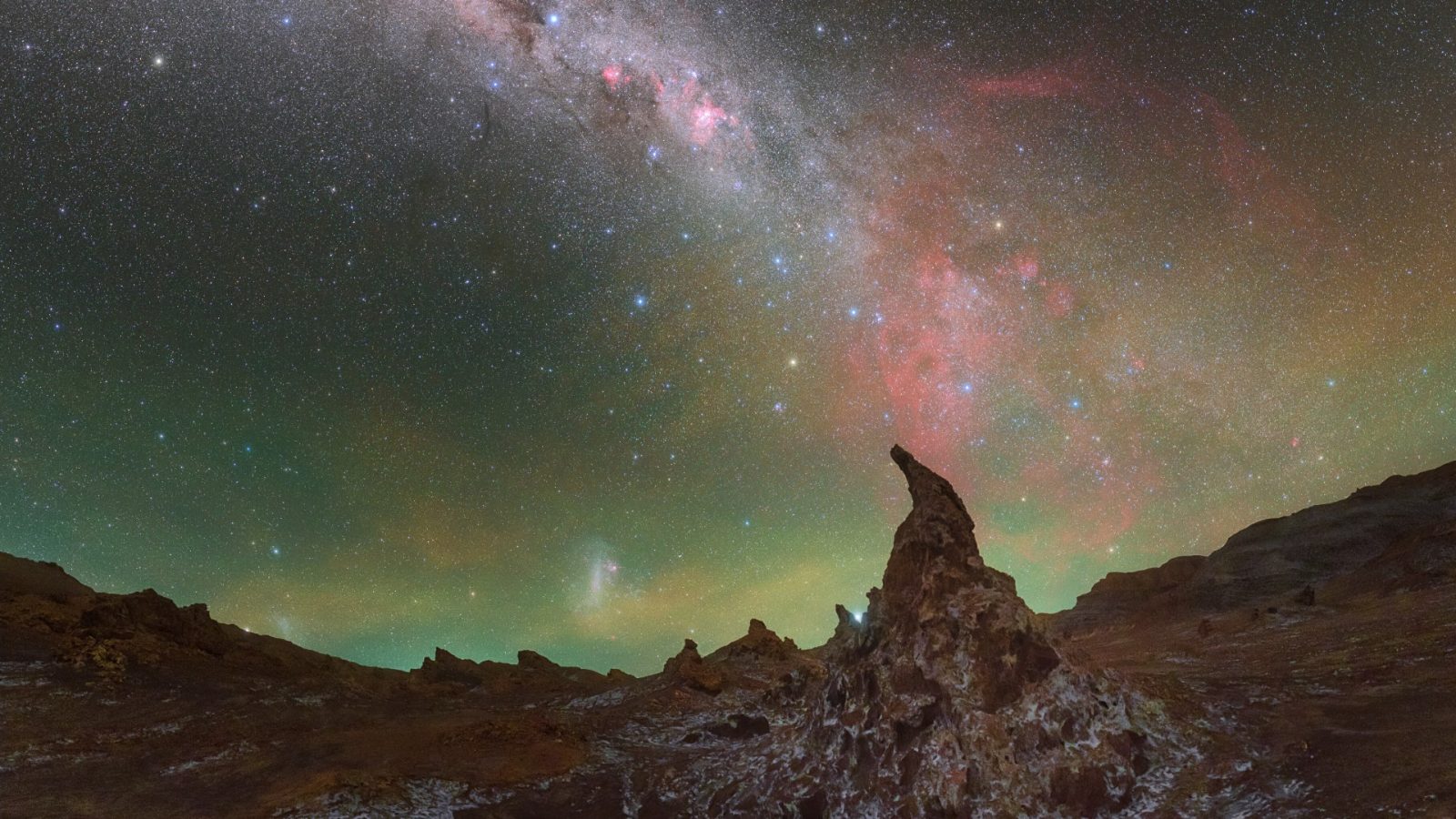
What the eyepiece delivers is emphatically southern. The Southern Cross. Alpha Centauri, 4.4 light years out. The Large and Small Magellanic Clouds, two satellite galaxies visible as smudges of grey. The Eta Carinae Nebula. Omega Centauri, a globular cluster of some ten million stars. Guided nights operate from private sites beyond the town's glow, where a site conservation fee of 5,000 CLP per person supports the ground itself. Sessions run between 19:00 and 23:59, tracking the lunar cycle more closely than the clock, since a full moon erases the faintest objects. Dobsonian reflectors, tripod-mounted cameras and Andean storytelling now share the same gravel clearing. Atacama Desert stargazing tickets tours have multiplied across the Antofagasta Region, yet the constant is unchanged: the darkest accessible sky on the continent, and the volcano Licancabur, 5,916 metres, holding one edge of it in silhouette.

The sky here is not merely visible; it is legible.
Wear multiple layers of warm clothing, including a heavy jacket, hat, and gloves, as nighttime temperatures in the desert frequently drop below freezing. Sturdy, closed-toe footwear is recommended for walking on uneven terrain.
Keep personal belongings to a minimum, as there is limited space for storage during stargazing sessions. Ensure all equipment is secured and accounted for before moving between observation points.
Use a tripod and manual settings to capture the night sky effectively during your visit. Avoid using flash photography, as it disrupts the night vision of other visitors and impairs long-exposure observations.
Children are welcome, but sessions require long periods of silence and stillness. Ensure younger visitors are prepared for the late hours and cold desert climate.
Many stargazing sites are located on natural, uneven desert ground which may not be wheelchair accessible. Guests with mobility concerns should contact individual operators to verify specific site layouts.
Hot beverages are sometimes provided, but guests are encouraged to bring their own water. Consuming alcohol before or during the tour is discouraged to maintain safety in the dark.
Opening hours
19:00–23:59
Address
San Pedro de Atacama, Antofagasta Region, Chile
Accessibility
Varies by site, consult private operators
Best arrival window
19:00–22:00
Storage
Not provided, keep gear minimal
Site
Atacama Desert private stargazing locations
Taxi · Varies · High
The most reliable way to reach remote sites outside town limits.
Full refunds are typically provided if cancellations are made at least 24 hours in advance. Please note that the 5,000 CLP site conservation fee may be non-refundable depending on the specific provider policy.
Recommended time
3-4 hours
A typical session lasts several hours to allow for transit from San Pedro de Atacama, Antofagasta Region, Chile, and time for eyes to adjust to the dark sky. Securing atacama desert stargazing tickets tours requires careful planning, as the best arrival window is 19:00–22:00. These San Pedro de Atacama astronomy excursions move in manageable groups, ensuring that your nighttime observation session remains peaceful without significant wait times. Booking these stargazing tickets tickets well in advance is recommended to ensure your spot for a guided celestial tour.
Crowd levels through the day
Weather · crowds · average price — dots go green to amber to red as each metric rises.
Clear skies offer the best visibility for celestial observation. Daytime temperatures are mild, but nights are very cold.
Arrive a few days early to adjust to the high altitude of the Atacama Desert. This helps minimize symptoms of altitude sickness during your stargazing trip.
Calle Caracoles, San Pedro de Atacama
Standard meeting point for most local operators
Get directionsAstronomy in the Atacama predates the telescope. The Licanantay people mapped dark nebulae in the Milky Way, naming the Yacana llama and the Yutu partridge in the black clouds between stars. Their observations governed irrigation and planting cycles at Tulor, settled around 800 BCE. The sky was a calendar before it was a spectacle. The scientific era arrived with instruments. In 1969 the European Southern Observatory inaugurated La Silla, confirming what Chilean surveys had suspected: this plateau offers roughly 330 clear nights a year and negligible humidity. Cerro Paranal followed in 1999 with the Very Large Telescope. In 2013 ALMA began full operation on the Chajnantor plateau at 5,000 metres, a partnership of Europe, North America and East Asia. Public interest followed the science, and the first commercial atacama desert stargazing tickets emerged in San Pedro de Atacama during the 1990s, when French astronomer Alain Maury opened a private observatory outside town and began guiding visitors. Growth brought conflict. Light pollution from mining camps and expanding towns threatened the very darkness the observatories required. Chile responded with Decreto Supremo 686 in 1998, later strengthened by Norma Lumínica in 2013 and revised again in 2023, regulating outdoor lighting across Antofagasta, Atacama and Coquimbo. In 2015 the Atacama was designated part of an international dark-sky advocacy effort. Private operators now pay a 5,000 CLP site conservation fee per person for private stargazing locations, funding maintenance of the desert sites that make San Pedro de Atacama stargazing tours possible. What survives today is a working landscape rather than a monument. Sessions run 19:00–23:59 daily, with most operators recommending arrival between 19:00 and 22:00. Visitors booking atacama desert stargazing tickets tours encounter the same southern sky the Licanantay read: the Magellanic Clouds, the Southern Cross, and Eta Carinae burning above the driest non-polar desert on Earth.
The Tulor settlement near San Pedro de Atacama establishes agriculture guided by Licanantay observation of dark nebulae in the Milky Way.
The European Southern Observatory inaugurates La Silla, the first major international observatory built on Chilean desert terrain.
French astronomer Alain Maury opens a private observatory outside San Pedro, launching guided public astronomy and the earliest atacama desert stargazing tickets tour offerings.
Chile enacts Decreto Supremo 686, the country's first national regulation limiting outdoor light pollution in the northern regions.
The Very Large Telescope begins operation at Cerro Paranal, cementing the Atacama's status among global astronomy landmarks.
ALMA reaches full operation on the Chajnantor plateau at 5,000 metres, and Chile's Norma Lumínica tightens lighting standards across Antofagasta.
Revised dark-sky legislation extends lighting controls, protecting visibility for observatories and evening atacama desert stargazing tickets tickets alike.
Private desert sites operate nightly from 19:00 to 23:59 under a 5,000 CLP per-person conservation fee.
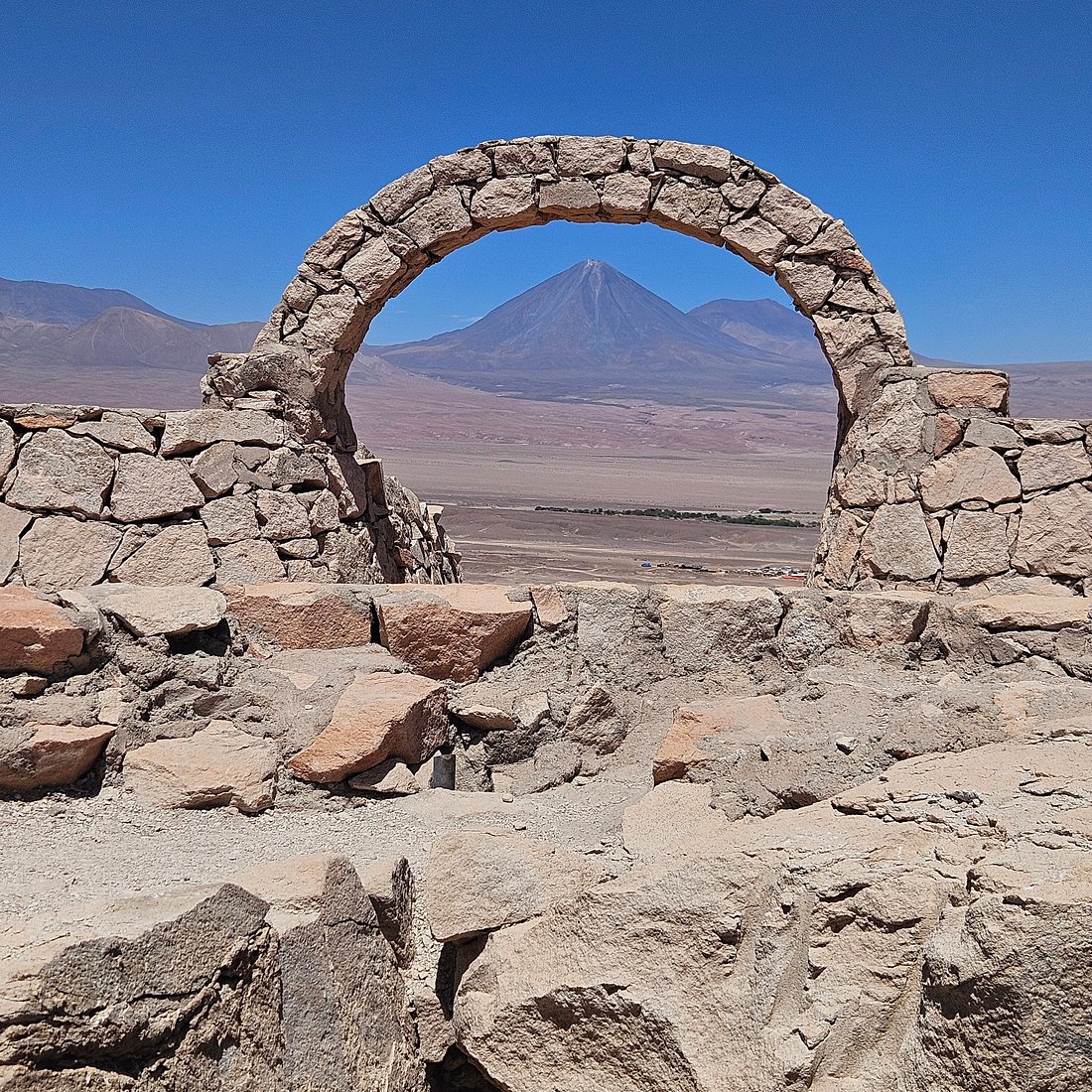
Position yourself on the elevated western ridge to capture the expansive horizon against the silhouette of Licancabur volcano. This spot offers a clear view of the night sky without obstruction.
This elevated vantage point provides a historical foreground of stone ruins framed by the Milky Way. Visitors often secure atacama desert stargazing tickets to access this area for long-exposure compositions.
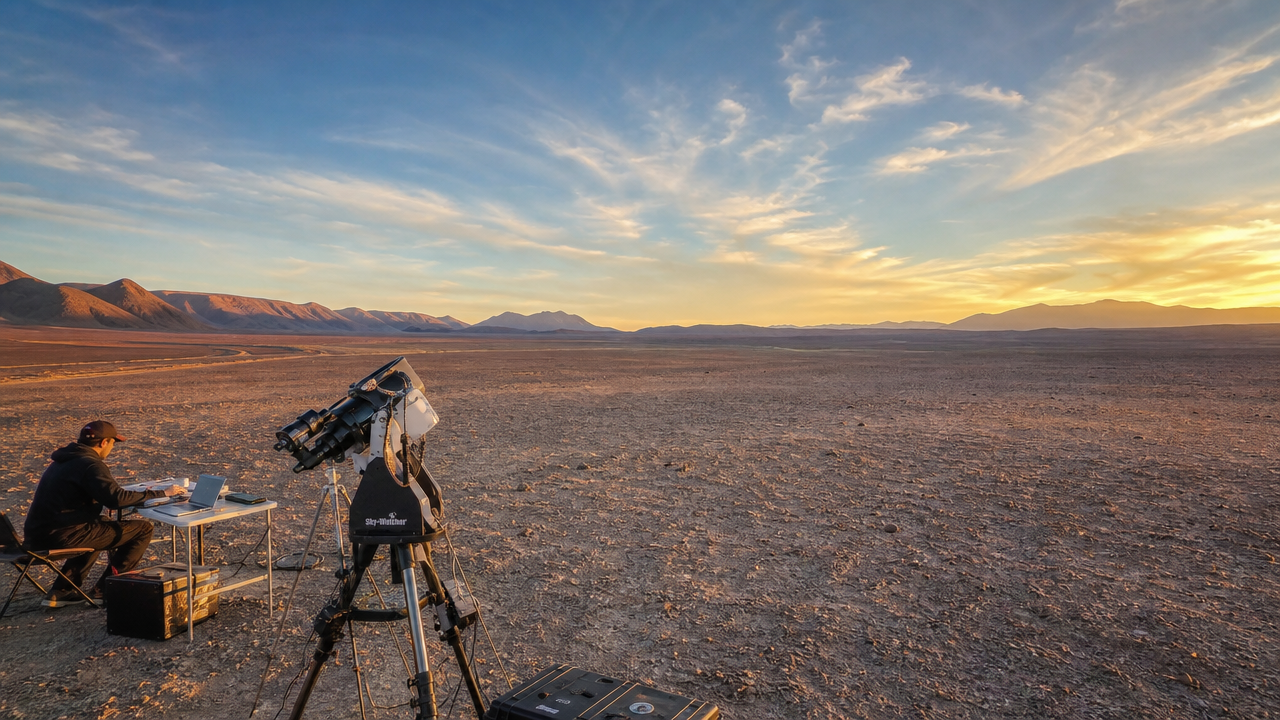
This expansive flat area serves as a primary location for tripod setups to track celestial movements. It is an ideal space to manage equipment while observing the southern constellations.
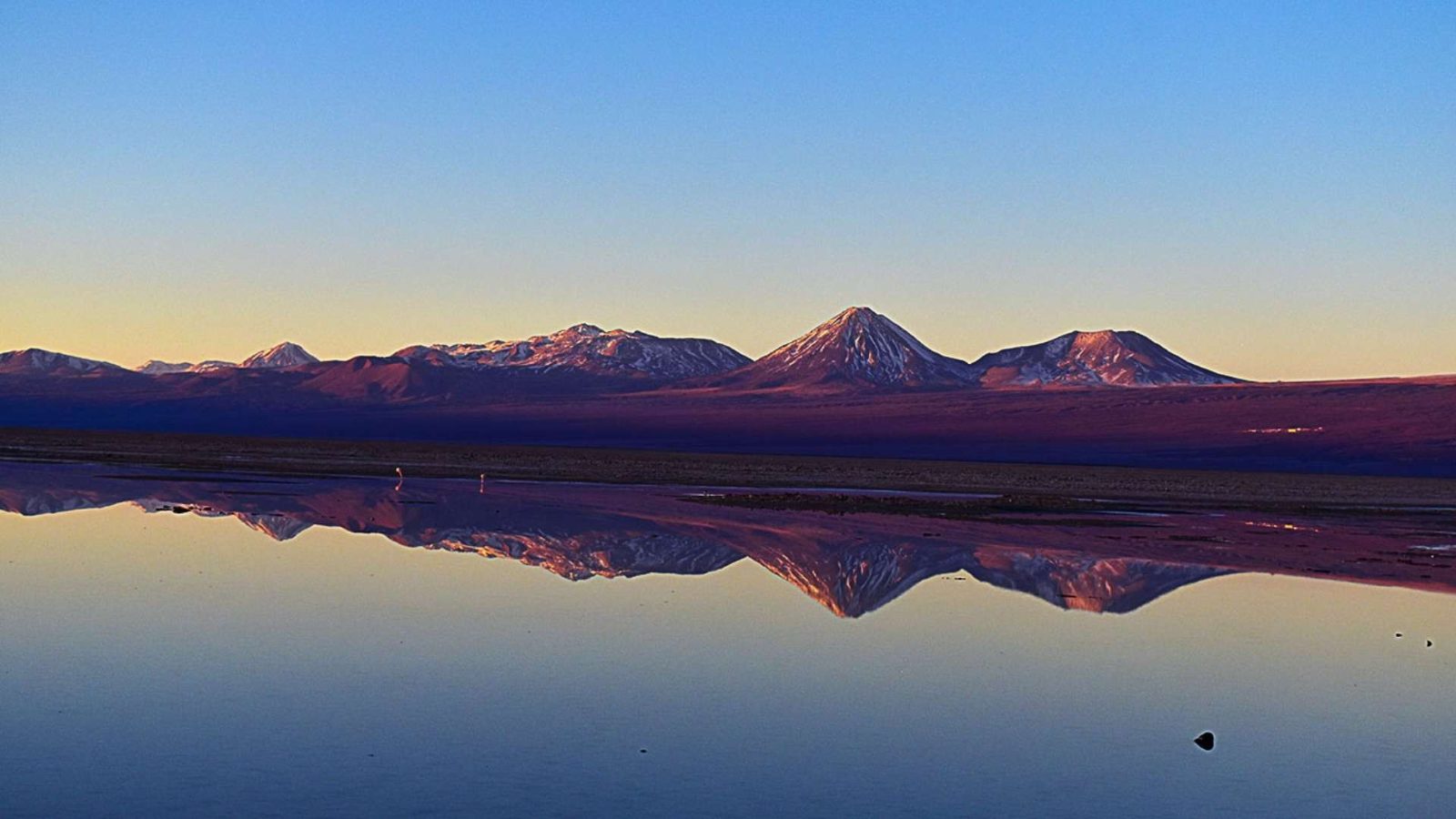
The salt crust creates a natural mirror effect, perfect for capturing star reflections near the water surface. Ensure you have your permits prepared for these specific atacama desert stargazing tickets tours locations.
Exploring the cosmos through atacama desert stargazing tickets provides a unique educational experience for families willing to manage late hours. Preparation is key to ensuring children remain comfortable while observing celestial bodies in the high-altitude environment.
Temperatures drop significantly at night, so dress children in multiple layers, including hats and gloves, to stay warm during these atacama desert stargazing tickets tours.
Most providers recommend children be at least 6 years old to remain quiet and attentive, as these atacama desert stargazing tickets tour sessions require stillness.
There are no stroller-accessible paths or baby-change facilities in the open desert, so ensure your child is comfortable sitting or standing for long periods.
Since the best arrival window is 19:00–22:00, consider adjusting your daily schedule to allow for a daytime nap so children stay alert for the viewing.
Pack your own snacks and water for the duration of the visit, as there are no food services available at the observation locations for your atacama desert stargazing tickets tickets.
Dining options are limited near the observation sites, so visitors holding atacama desert stargazing tickets often prefer to eat in town before departure. You will find various bistros and cafes in San Pedro de Atacama that cater to those preparing for a night under the Milky Way.
Known for traditional Andean flavors and hearty meat dishes, this spot is perfect before your atacama desert stargazing tickets tours. The rustic interior provides a warm environment during the cooler desert evenings.
A popular choice for light snacks and hot beverages, ideal if you have purchased atacama desert stargazing tickets and need a quick meal. They serve local ingredients that provide energy for late-night sky observation activities.
This venue focuses on innovative preparations of regional products, offering a sophisticated pre-tour dining experience for those with atacama desert stargazing tickets tour reservations. Booking a table in advance is recommended due to its proximity to popular tour meeting points.
Everything you need to know for your journey
The sites operate daily from 19:00–23:59.
Yes, there is a 5,000 CLP site conservation fee per person for private stargazing locations.
Yes, you can secure your atacama desert stargazing tickets online through authorized operators.
The best arrival window is 19:00–22:00 for optimal darkness.
Yes, families are welcome, provided children can observe the required silence.
Cancellations 24 hours in advance are generally eligible for a refund, though the 5,000 CLP conservation fee may be excluded.
Yes, but please avoid using flash to maintain visibility for other guests.
Yes, items like laser pointers and white-light flashlights are prohibited during the experience.
Yes, you can visit local landmarks like Valle de la Luna earlier in the day before using your atacama desert stargazing tickets.
A vast lunar-like landscape featuring unique salt formations and craters. It is a world-renowned destination for geological observation during the day.
Various boutique hotels and hostels located within walking distance of tour departure points.
Join thousands of happy travelers who have discovered this incredible experience
Book Your Experience Now