
Quick answer
Public access to the atacama desert astronomy telescopes at Paranal Observatory runs on Saturdays only, 09:40–17:00, with entry free at 0 USD. Registration is mandatory and must be completed in advance through the official ESO channel — no on-site sign-ups. Arriving between 09:40 and 14:00 aligns with scheduled tour start times. Weekday visits are not possible; the site is closed Monday through Friday and Sunday.
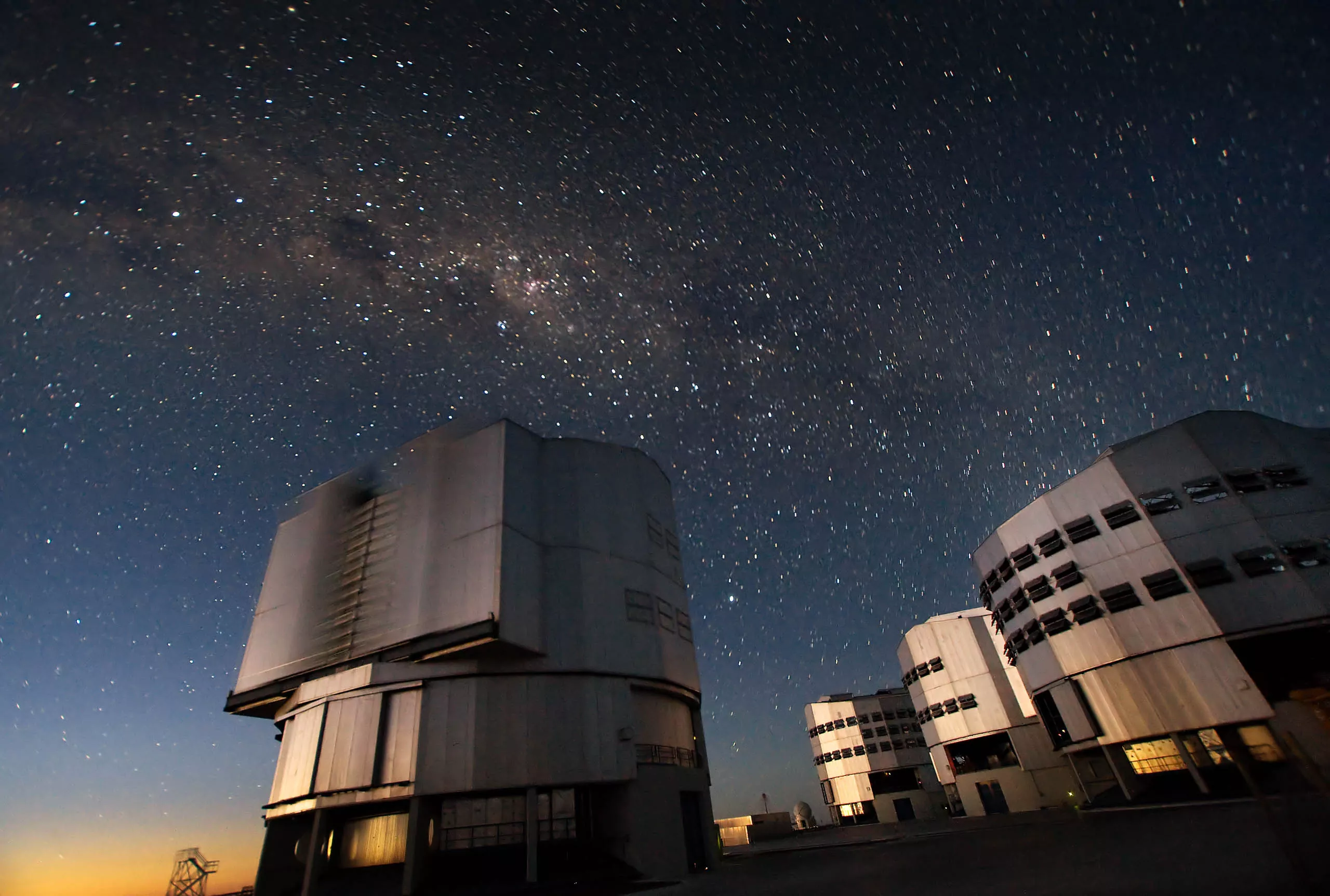
The mirror at the heart of each Very Large Telescope unit is 8.2 metres across and roughly 17 centimetres thick — proportionally thinner than a sheet of paper scaled to a dinner plate. It holds its shape only because 150 actuators push against its back in real time, correcting for gravity and wind as the dome tracks across the southern sky. That engineering detail explains more about visiting than any brochure: this is a working scientific installation, not an exhibition built for footfall. Most travellers arrive at the question of atacama desert astronomy telescopes expecting an observatory circuit similar to a museum trail. The reality is narrower. Cerro Paranal sits at 2,635 metres in the Antofagasta Region, roughly two hours south of Antofagasta city by road, surrounded by terrain so arid that parts of it register no recorded rainfall in the modern instrumental era. The observatory belongs to the European Southern Observatory, and its public programme exists alongside — never instead of — the nightly observing schedule. Visits happen in daylight. Nobody looks through the VLT. What visitors see instead is the control room, the telescope enclosures, and the Residencia, the half-buried hotel with its glass dome that appeared in Quantum of Solace. This distinction matters when planning. A Paranal Observatory tour is an engineering and science visit; the naked-eye stargazing that draws people to San Pedro de Atacama is a separate activity, run by separate operators, at separate hours. Travellers frequently conflate the two, then find themselves 200 kilometres from where they meant to be. The wider Atacama landmarks of astronomy — ALMA on the Chajnantor plateau, La Silla further south, the Extremely Large Telescope still rising on Cerro Armazones — each run their own access rules, and none of them interchange. What to do with that is straightforward. Treat the visit as a fixed point and build the trip around it, because the window does not flex. Registration through the official ESO system closes ahead of the date and cannot be resolved at the gate. Rental car logistics, altitude, and the drive from Antofagasta all deserve attention well before departure. Anyone researching atacama desert astronomy telescopes for a first trip should confirm their slot first, then arrange transport, then think about the night sky excursions that pair well either side. The sections that follow cover the weekly schedule, the road route, and the seasonal considerations in full.
“Visits happen in daylight, and nobody looks through the VLT — what you see is the machine, not the sky.”
How to Arrange Visits to Atacama Desert Astronomy Telescopes
This procedure takes you from finding an open Saturday slot to standing at the Paranal Observatory gate with a confirmed registration. The booking itself takes about fifteen minutes online, but the request must be submitted well ahead of your travel dates because places are limited and released in advance.
Check the official visit page
Start at https://www.eso.org/public/chile/about-eso/visitors/paranal/, where ESO publishes the current registration form and the dates still open. Tour availability changes without notice, so confirm on the official page rather than relying on a third-party listing or an older screenshot.
Pick an available Saturday date
Paranal runs public visits on Saturdays only, and each date fills as soon as it opens. Choose a first and second preference date, since the observatory assigns places rather than letting you self-select a confirmed slot.
Submit the registration request
Complete the online form with the full name, passport or ID number, and nationality of every person in your group. Names on the registration must match the documents you will present at the gate, as substitutions are not accepted on the day.
Wait for written confirmation
ESO replies by email with a confirmation or a place on a waiting list; an unanswered request is not a booking. Keep the confirmation email, printed or offline on your phone, because mobile coverage on the approach road is unreliable.
Read the safety conditions
The confirmation sets out rules on minimum age, closed footwear, and health restrictions at altitude. Visitors who arrive without meeting these conditions are turned away, so review them before finalising travel plans.
Plan arrival for 09:40–14:00
Aim to reach the gate inside the 09:40–14:00 arrival window, which matches the scheduled tour start times. Arriving after your assigned start time means the group has already left the reception building.
Present ID at the gate
Bring the passport or ID used in your registration and show it with your confirmation at the entrance checkpoint. Names are checked against the day's list, and anyone not registered in advance cannot be added on site.
Public Opening Hours for Atacama Desert Astronomy Telescopes
The Paranal Observatory provides public access exclusively on Saturdays. Visits require advance registration, as the facility is closed to the public throughout the remainder of the week.
| Monday | Closed | |
|---|---|---|
| Tuesday | Closed | |
| Wednesday | Closed | |
| Thursday | Closed | |
| Friday | Closed | |
| Saturday | 09:40–17:00 | |
| Sunday | Closed |
Getting to Atacama Desert Astronomy Telescopes
The Paranal Observatory is located in the remote Antofagasta Region of the Atacama Desert. Reaching the site requires private vehicle transportation, as there is no public transit access to this isolated research facility.
Route 5 Pan-American Highway to B-710 access road
Private hire from Antofagasta city center
Best Time to Visit Atacama Desert Astronomy Telescopes
The most effective time to visit is during the shoulder months of April to June or September to November, when clear skies are most consistent. Visitors should aim to arrive during the designated best arrival window of 09:40–14:00 to align with scheduled tour operations.
April–June
Moderate crowdsCool days, cold nights; 5°C–20°C
Stable atmospheric conditions provide excellent visibility for observatory tours.
July–August
Peak tourist seasonColdest months; 0°C–18°C
High demand requires earlier planning despite consistent clear skies.
September–November
Moderate crowdsMild days, chilly nights; 8°C–22°C
Increased daylight hours allow for comfortable site navigation during the primary arrival window.
Saturday 09:40–14:00
High attendance—
This window is strictly required for entry and aligns directly with tour start times.
Verdict: Plan your visit for a Saturday between September and November, ensuring your arrival occurs within the 09:40–14:00 window to coincide with observatory operations.
Interesting Facts About Atacama Desert Astronomy Telescopes
The Atacama Desert provides an ideal environment for astronomy due to its high altitude, extreme aridity, and minimal light pollution. These conditions allow telescopes to capture clear, detailed observations of the universe.
5,000 meters elevation provides thin, stable air
The high-altitude terrain of the Andes reduces atmospheric distortion, which allows telescopes to achieve superior image clarity compared to sea-level observatories.
Very Large Telescope uses four main mirrors
The VLT consists of four Unit Telescopes, each with an 8.2-meter diameter mirror, which can work together to act as a single giant interferometer.
300 nights per year are cloud-free
The specific climate of the Atacama Desert offers one of the highest numbers of clear nights on Earth, maximizing the potential for continuous astronomical research.
ESO operates the Paranal Observatory facility
The European Southern Observatory maintains several advanced instruments at Cerro Paranal, including the VLT and the Visible and Infrared Survey Telescope for Astronomy.
ALMA uses 66 high-precision antennas
Located on the Chajnantor Plateau, the Atacama Large Millimeter/submillimeter Array functions as a single telescope to study the cold gas and dust where stars are born.
Zero percent humidity is common
The extreme dryness of the region prevents water vapor from absorbing infrared radiation, allowing astronomers to observe parts of the light spectrum that are blocked elsewhere.
Check availability
Frequently Asked Questions About Atacama Desert Astronomy Telescopes
Everything you need to know about atacama desert astronomy telescopes