

Quick answer
Yes — stargazing in public desert areas of the Atacama is free, with an entrance fee of 0 CLP and access available 00:00–23:59, seven days a week. The practical window is 22:00–04:00, once astronomical twilight has ended and light pollution is at its lowest. The main caveat is lunar: a bright moon washes out the faint sky regardless of conditions.
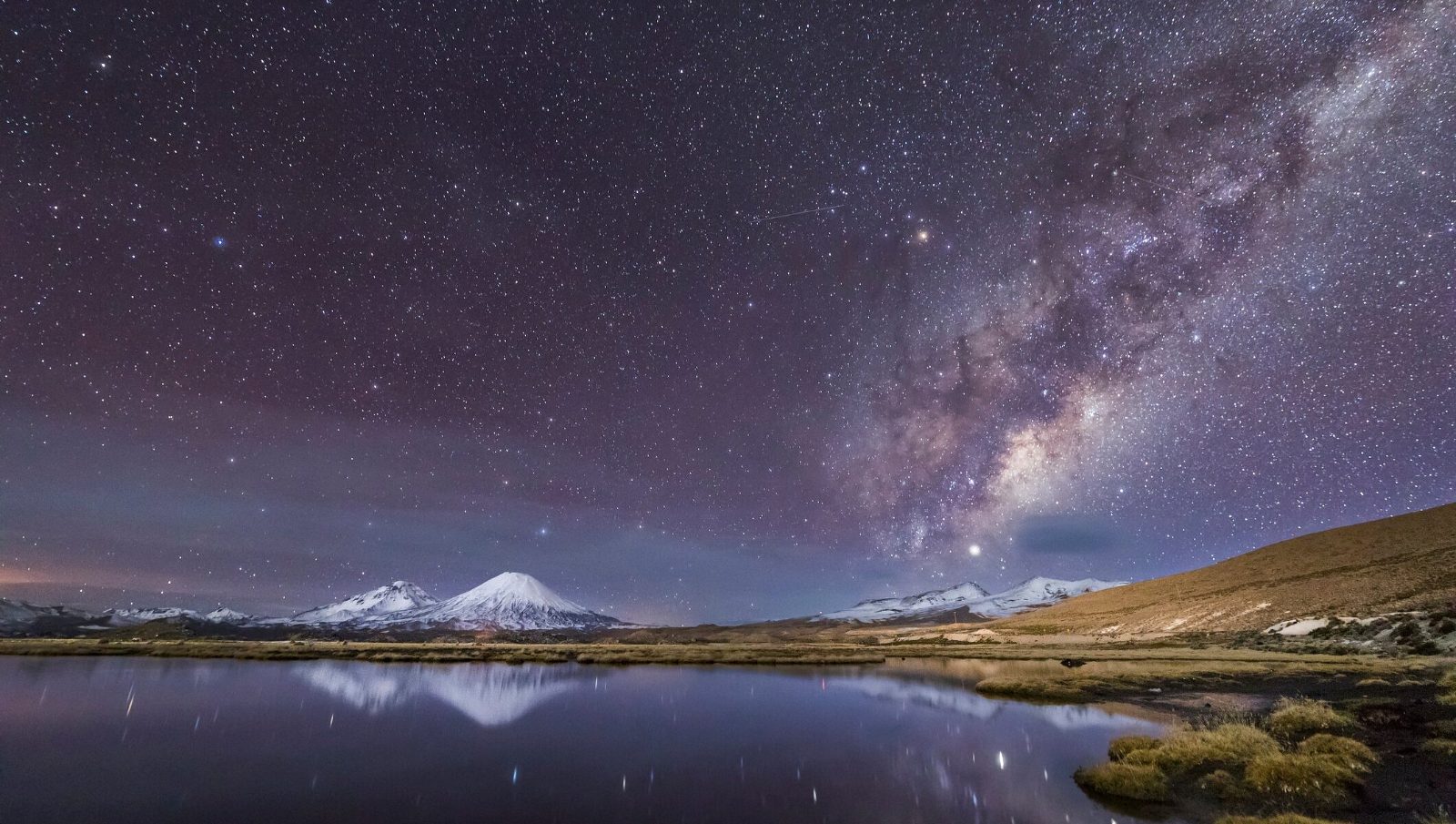
The Atacama receives less than a millimetre of rain a year in places, and that aridity is why the European Southern Observatory placed Paranal and ALMA here rather than anywhere else in the hemisphere. The same physics that draws professional astronomers works for anyone standing on a roadside verge: minimal water vapour, high altitude, and almost no atmospheric turbulence. Understanding this is the first step for anyone planning stargazing atacama without tour, because the advantage is environmental rather than something purchased at a gate. What the reader is dealing with is a question of access rather than admission. Public desert areas in the Antofagasta Region carry no ticket and no closing time — the address is simply Atacama Desert, Antofagasta Region, Chile, and the land is open around the clock. That is different from the observatories themselves. Facilities such as ALMA and the ESO sites operate their own visitor programmes with fixed schedules and restricted zones, and no independent visitor should assume walking access to them. Astro-tourism operators around San Pedro de Atacama occupy a middle ground, offering telescopes and interpretation that no roadside vantage point can match. Independent viewing sits alongside those options, not in opposition to them. The southern sky is the reason the distinction matters. From this latitude the Magellanic Clouds sit high, the galactic core of the Milky Way passes near the zenith in the austral winter months, and the Southern Cross is visible for most of the year. Naked-eye observers see structure here that no northern site delivers. The dark nebula the Andean peoples call the Yacana, traced in the dust lanes of the Milky Way rather than in its stars, is legible without optics on a moonless night. What to do with that answer is straightforward. Treat the 22:00–04:00 window as the frame, check the lunar calendar before fixing a date, and decide honestly whether identification and equipment matter to the experience. Many visitors do both across a multi-night stay: one guided session for the telescopes and the constellation naming, one quiet night alone. Anyone weighing a self-guided evening should read this page's dedicated sections on timing, access routes, costs, preparation and common errors before committing — stargazing atacama without tour rewards planning far more than it rewards spontaneity.
“The advantage here is environmental rather than something purchased at a gate.”
The Optimal Window for Stargazing Atacama Without Tour
The best time for independent stargazing in the Atacama Desert is within the 22:00–04:00 arrival window. This period ensures complete astronomical twilight and minimal light interference for observing the night sky.
April to June
Low to moderateClear skies, 0°C to 10°C
Stable conditions offer high visibility for the galactic center. Nights are cold but dry.
July to September
Moderate to highCold, -5°C to 8°C
High air stability provides sharp stellar clarity. Ensure gear is rated for freezing temperatures.
October to December
Low to moderateMild, 5°C to 15°C
Longer clear nights persist before the summer cloud cover. Ideal for extended observation sessions.
Verdict: The optimal stargazing experience occurs during the 22:00–04:00 window in the months of April or October when weather conditions are most stable.
Navigating to Stargazing Atacama Without Tour Locations
Independent stargazing in the Atacama Desert typically requires a vehicle to reach dark sites away from the light pollution of San Pedro de Atacama. Visitors generally head toward open areas along the main regional routes.
Route 23 towards Socaire
Route B-245 towards Moon Valley
Private hire from San Pedro de Atacama
Essential Preparation for Stargazing Atacama Without Tour
Independent stargazing in the Atacama Desert depends on gear you bring yourself, since public desert areas have no facilities, lighting, or equipment rental.
-
Download offline maps and star charts — Mobile coverage disappears outside town, so cached maps and a sky app keep you oriented.
-
Pack a red-light headlamp — Red light preserves night vision, while white beams reset your eyes for roughly 20 minutes.
-
Layer thermal clothing, hat, gloves — Desert temperatures drop sharply after sunset, often near or below freezing at altitude.
-
Check the lunar phase — A full moon washes out the Milky Way, while new-moon nights show far more detail.
-
Charge power banks before leaving — Cold drains phone and camera batteries fast, and there are no charging points in the desert.
-
Bring binoculars or a tripod — 7x50 binoculars reveal star clusters, and a tripod steadies long-exposure night photography.
-
Carry water, snacks, and a blanket — Sessions in the 22:00–04:00 window run long with nothing available nearby.
-
Tell someone your planned location — Remote desert sites are unlit and unstaffed, so a shared plan matters.
Common Mistakes to Avoid When Stargazing Atacama Without Tour
Independent stargazing in the Atacama removes the safety net a guide provides, and most problems trace back to a handful of avoidable errors. These are the ones that turn a clear night into a stranded, cold, or wasted one.
Driving unpaved desert tracks after dark without experience
Stay on surfaces you have already driven in daylight, and stop where you can see the road edge rather than pushing further into soft sand or washboard. If the track is unfamiliar, turn around while you still have room to do so.
Leaving headlights, hazards or interior lights on
Kill all vehicle lights, including running and dome lights, as soon as you park, and open doors sparingly. A single set of headlights ruins dark adaptation for everyone within sight, including your own group.
Ignoring altitude above 2,400 m
Spend a night or two at San Pedro de Atacama's elevation before heading higher, and descend immediately if headache, nausea or breathlessness sets in. Skip alcohol beforehand.
Going out alone with no one informed
Tell someone at your accommodation where you are going and when you expect to return, and go with at least one other person. Mobile coverage disappears within minutes of leaving town.
Assuming phone signal and GPS will work
Download offline maps, carry a paper map, and note your route landmarks before dark. Do not rely on a phone battery that drains fast in near-freezing night temperatures.
Using white torches to move around the site
Use a red light or a red filter over a white one. White light destroys night vision and takes 20 to 30 minutes to recover from.
Check availability
Frequently Asked Questions About Stargazing Atacama Without a Tour
Everything you need to know about stargazing atacama without tour